Jean-Luc Demaret G
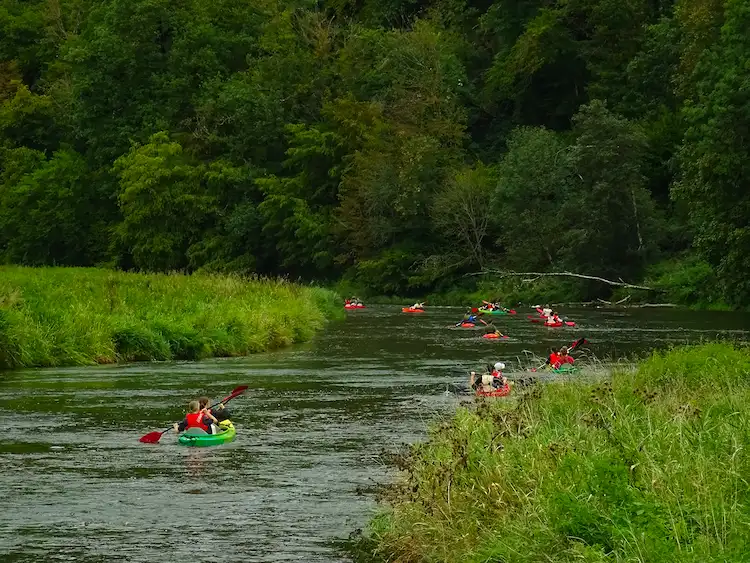
« A perfect family day on the Semois. The welcome at Kayak Belgique is warm, the equipment is spotless (the kayaks are modern and clean), and the free shuttle system is superbly organised. A must-visit in the Ardennes! »
Governance, Semois National Park, sustainable labels, the AGRETA project and new premium investment models — the Ardennes is reinventing its tourism.
Long perceived as a simple rural holiday destination, the Belgian Ardennes is establishing itself in 2026 as a European model for reconciling ecosystem preservation with the economic development of its landscapes. Public authorities and private stakeholders have completely rethought visitor management paradigms in the face of the climate emergency and the documented erosion of local biodiversity.
The Commissariat Général au Tourisme (CGT) has undergone a strategic transformation, moving beyond its traditional supervisory role to take on a position of proactive support for industry professionals. Working in synergy with Wallonie Belgique Tourisme (WBT), it deploys the VisitWallonia.be platform for a dual purpose: professional digital coordination and guidance for leisure tourists.
The central strategic axis aims to enrich and narrativise the offering to mechanically extend the duration of stays, stimulating economic returns whilst diluting the carbon footprint of travel. Training front-of-house staff in Dutch, English and German is identified as a sine qua non for attractiveness.
The Walloon Tourism Observatory (OwT) coordinates data collection to fine-tune policies. For Belgian visitors, the PASS VisitWallonia prevents visitor fatigue. For international markets, the strategy refocuses on proximity markets to optimise campaign ROI.
Since 2018, the CGT and the Federation of Natural Parks of Wallonia (FPNW) have been deploying the European Charter for Sustainable Tourism (ECST). In the Hauts-Pays Natural Park, this charter funds free training for operators (hospitality, craftspeople, guides, educational farms) in Google My Business listing, Green Key and Cycling Welcome labels.
Three technical guides have been co-published with the Haute École Robert Schuman and Gembloux Agro-Bio Tech: planning bivouac areas, developing tourism in high biological value spaces, and best practice recommendations.
Officially recognised at the end of 2022, the Semois Valley National Park (28,980 ha, 675 km of meanders) is deploying an action plan through to 2026 built around three operational pillars that serve as a national benchmark for scientific ecotourism.
Structuring a network of 30 ambassador guides for land-based accompaniment and the unprecedented creation of 20 river guides specialising in silent Canadian canoe (ASBL D'une Cime à l'Autre), with groups strictly limited to 10 persons to eliminate acoustic impact on birdlife.
Creation of 3 to 5 non-intrusive wildlife observation hides, development of 8 official swimming areas (including one accessible to persons with reduced mobility), and installation of 4 new bivouac areas along the GR16 to regulate wild camping.
Development of the Nature Wellbeing axis (forest therapy, mindful walking) with 10 specialist guides. Artistic project "Sortons sous la pluie" — multi-sensory installations activated by rainfall to de-seasonalise visitor numbers.
| Gateway municipality | Thematic focus | Redistribution mode |
|---|---|---|
| Bertrix | Deep forest, MTB trail | Shuttles, overflow car park |
| Bouillon | Medieval castle, Semois confluence | River transport, bicycles |
| Chiny | Fonds de Gaume descent | Seasonal shuttle |
| Florenville | Panoramic view, viticulture | Himalayan footbridge |
| Herbeumont | Hilltop castle, mountain biking | Car park + cycle station |
| Vresse-sur-Semois | Kayak, hiking, ephemeral footbridges | Soft mobility, kayak base |
The INTERREG AGRETA project (Ardenne Grande Région Écotourisme et Attractivité), although closed in mid-2021, laid the intellectual and infrastructural foundations that still shape regional actions in 2026. Bringing together 11 operators under the aegis of the GEIE "Destination Ardenne" with €2.33M (of which 60% ERDF), this programme elevated the cross-border Ardennes (Belgium, France, Germany, the Netherlands) to the status of a benchmark ecotourism destination.
Stemming from research by the University of Liège (Gembloux Agro-Bio Tech) and INRAE Nancy, the Eco-Tour Lab platform brings together the general public, local operators and the scientific community to collect continuous data, anticipate changes in recreational behaviour and simulate alternative landscape management scenarios.
5 exhaustive studies generated 5 university reports and a 40-page summary brochure providing decision-makers with an unprecedented precision diagnosis of the actual uses of natural spaces and the economic value of the recreational function of forests.
The project also demonstrated its agility in the face of Ardennes fieldwork constraints: the initial accessible route (Viroin-Hermeton and Ardennes Parks) was redirected towards a cross-border trail specially designed for visitors with hearing or cognitive impairments, which earned the French "Tourisme & Handicap" label. All these advances are centralised on the unified platform visitardenne.com.
In the face of semantic inflation around "green tourism", Wallonia strategically relies on independent, technically rigorous certification labels to restore consumer trust.
Carried by the Foundation for Environmental Education in 90+ countries, managed in Wallonia by Inter-Environnement Wallonie (IEW). In 2026: 100+ certified establishments. Mandatory on-site audits every 3 years, annual documentary renewal.
Free CGT label for accommodation, hospitality, attractions and cycle hire businesses located within 5 km of an official cycling network (RAVeL, EuroVelo EV3, EV5, EV19). Wallonia is a major cycling tourism destination boosted by the democratisation of e-bikes.
The growing density of visitors to forest areas is intensifying use conflicts between hikers, mountain bikers and hunters — particularly during autumn drive hunts. The law of 28 February 1882 ties hunting rights to land ownership; the rare but widely reported deaths of non-hunters from accidental shootings have entrenched a sense of insecurity that hampers off-peak tourism development.
From an ecological standpoint, hunting is still defended as a public health necessity: the explosion in ungulate populations (wild boar, deer) threatens forest regeneration, causes massive agricultural damage and raises zoonosis risks (African swine fever).
Developed by the Department of Nature and Forests (DNF), this digital portal fulfils two crucial functions:
In 2026, massive flows of private capital — predominantly Flemish and Dutch — are radically transforming the Ardennes accommodation offering. Flanders, confronted with maximum land artificialisation and prohibitive property costs, finds in the Walloon Ardennes highly attractive financial equations for high-end heritage rehabilitation.
A flagship project by David Janssen (Manaux Châteaux), acquired with own funds in June 2025. Construction of 11 upmarket gîtes (10 to 24 persons) in the Ourthe Valley, with near-total autonomy: drinking water boreholes, solar panels, heat pumps, micro-hydroelectric turbines integrated into retention basins, and an autonomous wastewater treatment station.
Innovative financing via BeeBonds (crowdlending €650–850K at 8.5% over 2 years) + €800K own funds + €6M bank loan deferred until permits are granted. Replanting of 1,000+ native deciduous trees to restore biodiversity corridors.
This model is part of Manaux Châteaux's proven portfolio: Château de la Rochette (Libin), Château de Lihérin (Gouvy), Château de Méliris (Tenneville). These converted estates, rehabilitated without heritage alteration, record occupancy rates far exceeding business plan projections, demonstrating the viability and profitability of grand luxury heritage ecotourism in the Belgian Ardennes.
The ECST is a structured methodological framework jointly adopted by the CGT and the Federation of Natural Parks of Wallonia since 2018. It ensures responsible, concerted management of tourist flows in protected Ardennes territories, with free training tools and monitoring indicators co-developed with Gembloux Agro-Bio Tech.
In 2026, Wallonia surpasses the symbolic threshold of 100 Green Key-certified establishments, an international label managed by Inter-Environnement Wallonie (IEW) that requires on-site audits every three years covering water management, energy efficiency, responsible sourcing and environmental awareness.
Recognised at the end of 2022, the Semois Valley National Park (28,980 ha) is deploying a 2026 action plan built around 3 pillars: 30 ambassador guides and 20 river guides supervising 2,600 visitors, engineering of wildlife observation hides and 4 new bivouac areas, and product innovation via forest therapy and artistic de-seasonalisation ("Sortons sous la pluie").
ChasseOnWeb is a digital portal from SPW Environnement that publishes active hunting drive zones in real time. It interfaces with platforms such as Komoot and GR trails to plan routes avoiding shooting zones. The "Apaisons la forêt" charter (2021) complements this tool with 9 shared behavioural rules for hikers and hunters.
Absolutely. The National Park's strategy actively encourages this combination through its silent Canadian canoe river guides and its ambassador walking guides. The Kelhan Footbridge, hikes at Vresse-sur-Semois and the kayak descent of the Lesse fit perfectly within this logic of low-impact immersive ecotourism.
Book your kayak descent on the Semois and discover Ardennes ecotourism in its most immersive form — drifting with the current through preserved meanders at the heart of the wilderness.
Book my kayak ›Noté 4.6/5 sur 1282 avis
« A perfect family day on the Semois. The welcome at Kayak Belgique is warm, the equipment is spotless (the kayaks are modern and clean), and the free shuttle system is superbly organised. A must-visit in the Ardennes! »
« Beautiful kayak trip on the Semois starting from Vresse! Very friendly staff and excellent shuttle service. The riverside campsites along the Semois are also a must for nature lovers. »
« Superb 11 km kayak descent starting from Alle-sur-Semois. The wild nature of the Ardennes is magnificent in the spring sunshine. Very competitive prices compared to the competition. We'll be back! »
« Wonderful experience! The kayak tour on the Semois was perfectly organised. The team is very helpful and speaks good German. The scenery of the Belgian Ardennes is simply breathtaking. »
« Excellent kayak rental service and great campsite on the banks of the Semois. The prices are very fair and the atmosphere is friendly and family-oriented. The little terrace bar is perfect for a refreshing drink after the effort. »
« A fantastic last-minute welcome even though we hadn't booked in the middle of August. Life jackets and waterproof barrels are provided free of charge. Very safe descents, ideal with children! »
« Top-tier kayak rental on the Semois river. Extremely friendly staff, well-maintained kayaks, and a reliable shuttle. The viewpoints along the river are absolutely stunning. Highly recommend this local business! »