Jean-Luc Demaret G
« A perfect family day on the Semois. The welcome at Kayak Belgique is warm, the equipment is spotless (the kayaks are modern and clean), and the free shuttle system is superbly organised. A must-visit in the Ardennes! »
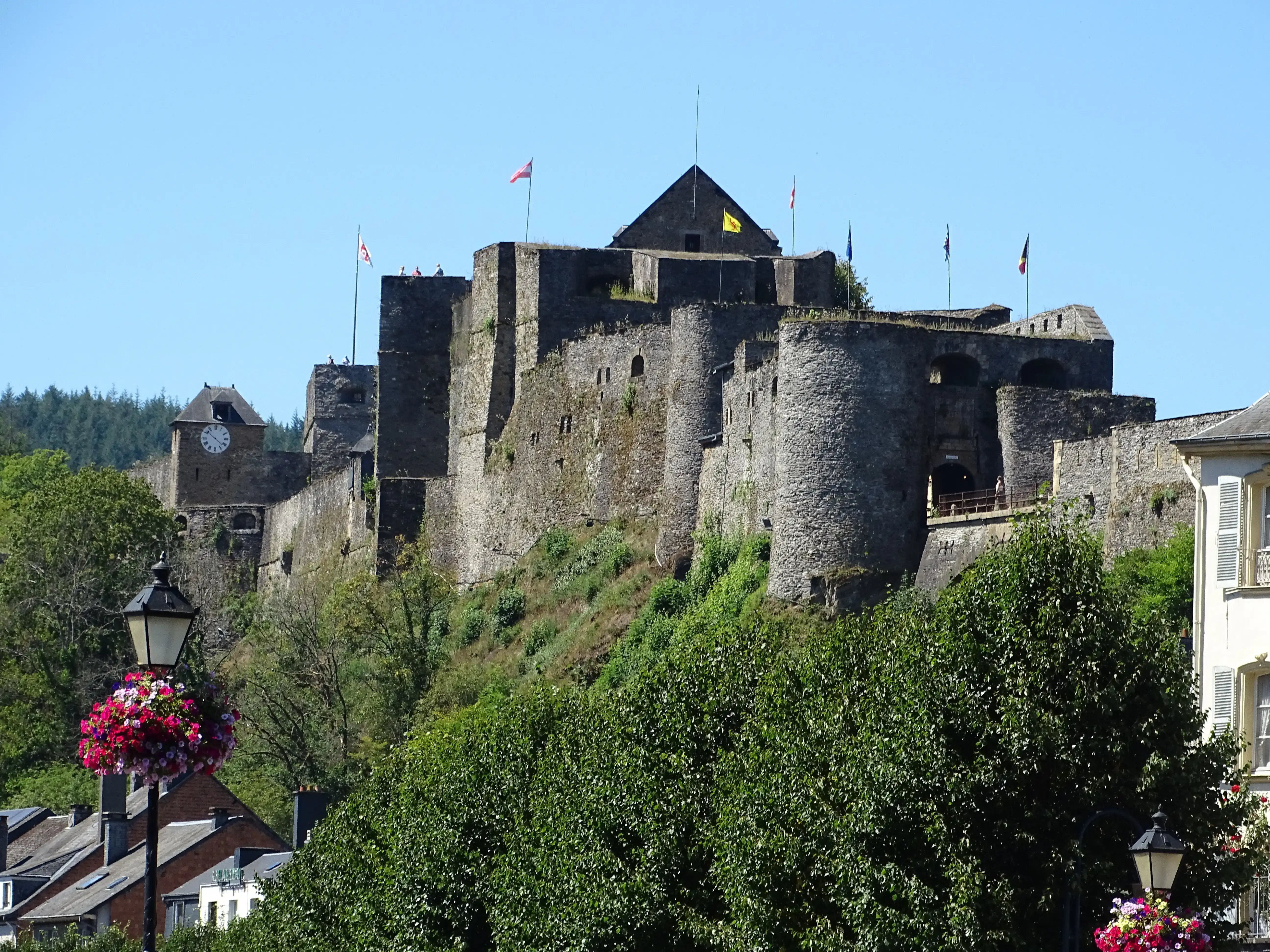
From Laforêt to Bouillon, from the schist of the houses to the tobacco-drying sheds: an honest tour of the villages that make the charm of the valley, to discover on foot, by car or along the water.
The Semois valley is far more than its river. Between Chiny and Bohan, over nearly two hundred kilometres of deeply incised meanders, it strings together a succession of schist villages nestled in the hollows of the loops or perched on the wooded slopes. Slate roofs, steep lanes, tobacco-drying sheds and squat bell towers make up a built heritage of rare coherence, shaped by the local stone and by centuries of rural Ardennes life. Two of them, Laforêt and Chassepierre, even feature among The Most Beautiful Villages of Wallonia. This page takes a tour of those worth the detour, and shows you how to link them together — on foot, by car or by kayak along the Semois.
Let us be clear from the outset, as always here: these villages are not frozen film sets nor paying attractions. They are real, inhabited villages, unassuming, where people come in search of quiet, a panorama, a terrace by the water. Their beauty lies precisely in this preserved authenticity. Here, village by village, is what each one really offers, and how to plan a discovery of the valley that does them justice.
The network of the Most Beautiful Villages of Wallonia distinguishes a demanding selection of rural villages with a remarkably well-preserved built and landscape heritage, on the model of the Most Beautiful Villages of France. In the Semois valley and its immediate surroundings, two villages carry this label: Laforêt and Chassepierre. They are the absolute must-sees for anyone seeking the most authentic rural charm.
Attached to the municipality of Vresse-sur-Semois, Laforêt is arguably the village that best embodies the soul of the lower Semois. Its schist houses with their slate roofs huddle along narrow lanes, and you can still make out the characteristic tobacco-drying sheds, tall louvred buildings that recall the great age of tobacco growing in the valley. Its most photographed emblem remains its wattle footbridge, a rustic bridge of woven branches rebuilt every summer above the river — a living custom, not a reconstruction. The village is also the starting point of the Walk of the Legends, a waymarked path that tells the local folklore.
Chassepierre, in the upper valley near Florenville, is an artists' village set on a loop of the Semois, at the foot of a baroque church topped with an onion dome. Its bucolic setting — the river, the meadows, the tufa caves, the listed presbytery — has long drawn painters and artists. Above all, it is world-famous for its International Street Arts Festival, which takes over the village and its banks each summer and draws a wide public. Outside the festival, Chassepierre recovers its quiet and can be savoured like a painting, on foot, wandering its lanes and its viewpoints over the Semois.
Beyond the two labelled villages, the Semois lines up a series of villages and small towns whose renown reaches far beyond the Ardennes. Some are prized for their history and their castle, others for their position within a meander or for the panorama they offer. Here are the most striking, from upstream to downstream.
Bouillon is the gateway and the flagship town of the valley. Curled into a tight meander of the Semois, it is dominated by its imposing medieval castle, one of the oldest feudal remains in Belgium, associated with the figure of Godfrey of Bouillon. The quays along the river, the bridges, the old houses and the silhouette of the fortress compose one of the most famous images of the Ardennes. It is the best base camp for exploring the valley, and an essential stop for understanding its history.
Perched on its slope, Rochehaut offers the most famous viewpoint of the whole valley: from its balcony, the eye plunges down onto the peninsula of Frahan, a tiny hamlet enclosed within an almost circular meander of the river. The contrast between the suspended village and the green loop below is striking, especially in the morning or autumn light. Down below, Frahan, the peninsula nestled in the meander, is reached on foot by a path that descends to the river. This Rochehaut-Frahan pairing is, for many, the scenic pinnacle of the Semois.
Vresse-sur-Semois, the historic tobacco capital of the valley, is a crossroads village on the lower Semois, crossed by an old stone bridge. Long an artists' village too, it retains a picturesque centre, a museum devoted to tobacco and local life, and fine riverbanks. It is also a classic starting point for kayak descents and an excellent base for exploring nearby Laforêt, Membre and Bohan.
Alle-sur-Semois, a village of schist and slate on the banks of the river, is one of the busiest launch points of the valley. Built on both banks, it combines old houses, accommodation and direct access to the water that make it a natural stop between paddling and walking. Its steep slopes and its viewpoints complete the picture.
Downstream, Bohan, the last Belgian village before the French border, marks the end of the Belgian Semois, at the gates of the Bohan-Membre nature reserve. Its neighbour Membre-sur-Semois, with its preserved riverbanks, shares this wild setting. Closer to Bouillon, Corbion, a hillside village in its forest cradle, wins visitors over with its tranquillity and its walks. On the heights above Bouillon, Poupehan and its viewpoints over the valley complete this constellation of hamlets of character.
Upstream, Herbeumont, dominated by the ruins of its medieval castle, watches over the upper valley. The ruins, clinging to a ridge, offer a panorama over the wooded meanders, while down below the Nawès river beach draws families in fine weather. It is one of the oldest castles in the region and a fine destination for a walk.
What strikes the visitor, from village to village, is the deep architectural unity of the valley. It owes nothing to chance: it stems directly from the bedrock and the local economy. To understand this built identity is to grasp why these villages resemble one another while each keeps its own character.
The Ardennes bedrock is made of schist, a foliated blue-grey rock long quarried on the spot. Traditional houses are therefore built of schist rubble, often rendered or left bare, and topped with slate roofs from the same geological layers. This dark stone, which turns blue in the rain and silvery grey in the sun, gives the villages their distinctive hue, in perfect harmony with the wooded slopes and the water of the river.
The other signature of the built landscape is the tobacco-drying sheds. From the 18th century until the mid-20th, the lower Semois — around Vresse, Laforêt, Alle and Bohan — was the heart of a famous cultivation of Semois tobacco, whose reputation was made by the valley-bottom microclimate. The leaves were dried in tall louvred wooden buildings, with walls of movable shutters to regulate the airflow. Many still survive, restored or weathered, and tell this agricultural story. The know-how of Semois tobacco is, moreover, recognised as Intangible Heritage of the Wallonia-Brussels Federation.
Not all the villages of the Semois are discovered in the same way. The geography of the valley — an incised river, villages sometimes on the water's edge, sometimes perched on the ridges — calls for combining approaches. Here is how to make the most of each.
The kayak descent offers the rarest viewpoint: that of the river itself. As you paddle, you skirt and cross several valley-bottom villages — you pass at the foot of Frahan, Alle, Vresse, Membre and Bohan, with the slate roofs and the banks slipping by to the rhythm of the current. It is an incomparable way to feel how these villages were born of the river. The perched villages (Rochehaut, Corbion, Poupehan), on the other hand, stay out of sight from the water: they call for another approach. To plan your route, everything is explained on our page about the descent of the Semois by kayak.
Walking remains the best way to grasp the soul of a village and to reach the finest viewpoints of the valley. The balcony of Rochehaut, the path that descends towards Frahan, the climb up to the Herbeumont ruins or the unmissable Giant's Tomb at Botassart — that wooded hill the river curves around as a peninsula — are all earned on foot. Long-distance enthusiasts can link several villages by following the walks of the Semois and the GR16, which runs the length of the valley.
Between villages, the car remains practical for covering distance and linking the perched hamlets that neither the kayak nor a short walk can reach. A fine day can chain Bouillon in the morning, Rochehaut and its view of Frahan at midday, then Vresse and Laforêt in the afternoon. The key is not to rush: the valley is savoured by stopping often, camera within reach.
Start at Bouillon for the castle and the quays, climb up to Rochehaut to admire the loop of Frahan, come back down by the path to the peninsula, then head for Vresse-sur-Semois and its neighbour Laforêt to end on the charm of the Most Beautiful Villages. In season, you can fit in, midway through the day, a kayak descent between two valley-bottom villages.
| Season | Atmosphere in the villages |
|---|---|
| Spring (Apr.–June) | Slopes of tender green, calm villages before the high season, Laforêt's wattle footbridge rebuilt as summer approaches. Ideal for walking and photography. |
| Summer (July–Aug.) | The peak season: lively terraces, Chassepierre's Street Arts Festival, kayak descents and swimming. More people; favour early morning at popular sites such as Rochehaut. |
| Autumn (Sept.–Oct.) | The finest scenic moment: the beech woods blaze with copper and gold around the villages, the viewpoints over the meanders are magnificent and the valley recovers its calm. |
The villages are only a gateway to all that the Semois has to offer. To understand the valley as a whole, its history and its activities, browse our guide to tourism in the Semois valley. Nature lovers will enjoy our guide to the wildlife and flora of the Semois, while photographers will watch for the spectacle of the morning mists over the meanders, which transfigure villages and valley in the first hours of the day.
And because the finest way to link these villages remains the river itself, a kayak descent stays the experience not to be missed. It offers that unique view, at water level, of the schist hamlets and the wooded slopes that make the Semois.
From Laforêt and Chassepierre, the two Most Beautiful Villages of Wallonia, to Bouillon and its castle, from the balcony of Rochehaut over Frahan to the preserved hamlets of Bohan, Membre, Corbion or Herbeumont, the Semois valley lines up a remarkable collection of villages of character. They all share the same material — schist and slate —, the same memory of tobacco, and the same intimate dialogue with the river. There is no wrong starting point: the valley lends itself to wandering, at your own pace, from village to village. And to discover it from its rarest angle, nothing beats travelling it along the water, by kayak on the Semois.
Sources: The Most Beautiful Villages of Wallonia (labelling of Laforêt and Chassepierre); National Park of the Semois Valley (built and landscape heritage of the valley); Tourist Offices of the Semois valley and the Semois-Chiers (villages, viewpoints, Chassepierre festival); Cultural Heritage of the Wallonia-Brussels Federation (know-how of Semois tobacco). The village descriptions are an honest tourist presentation and constitute neither an official ranking nor a guarantee of opening times or access; check practical information with the local tourist offices before your visit.
Noté 4.6/5 sur 1282 avis
« A perfect family day on the Semois. The welcome at Kayak Belgique is warm, the equipment is spotless (the kayaks are modern and clean), and the free shuttle system is superbly organised. A must-visit in the Ardennes! »
« Beautiful kayak trip on the Semois starting from Vresse! Very friendly staff and excellent shuttle service. The riverside campsites along the Semois are also a must for nature lovers. »
« Superb 11 km kayak descent starting from Alle-sur-Semois. The wild nature of the Ardennes is magnificent in the spring sunshine. Very competitive prices compared to the competition. We'll be back! »
« Wonderful experience! The kayak tour on the Semois was perfectly organised. The team is very helpful and speaks good German. The scenery of the Belgian Ardennes is simply breathtaking. »
« Excellent kayak rental service and great campsite on the banks of the Semois. The prices are very fair and the atmosphere is friendly and family-oriented. The little terrace bar is perfect for a refreshing drink after the effort. »
« A fantastic last-minute welcome even though we hadn't booked in the middle of August. Life jackets and waterproof barrels are provided free of charge. Very safe descents, ideal with children! »
« Top-tier kayak rental on the Semois river. Extremely friendly staff, well-maintained kayaks, and a reliable shuttle. The viewpoints along the river are absolutely stunning. Highly recommend this local business! »