Jean-Luc Demaret G
« A perfect family day on the Semois. The welcome at Kayak Belgique is warm, the equipment is spotless (the kayaks are modern and clean), and the free shuttle system is superbly organised. A must-visit in the Ardennes! »
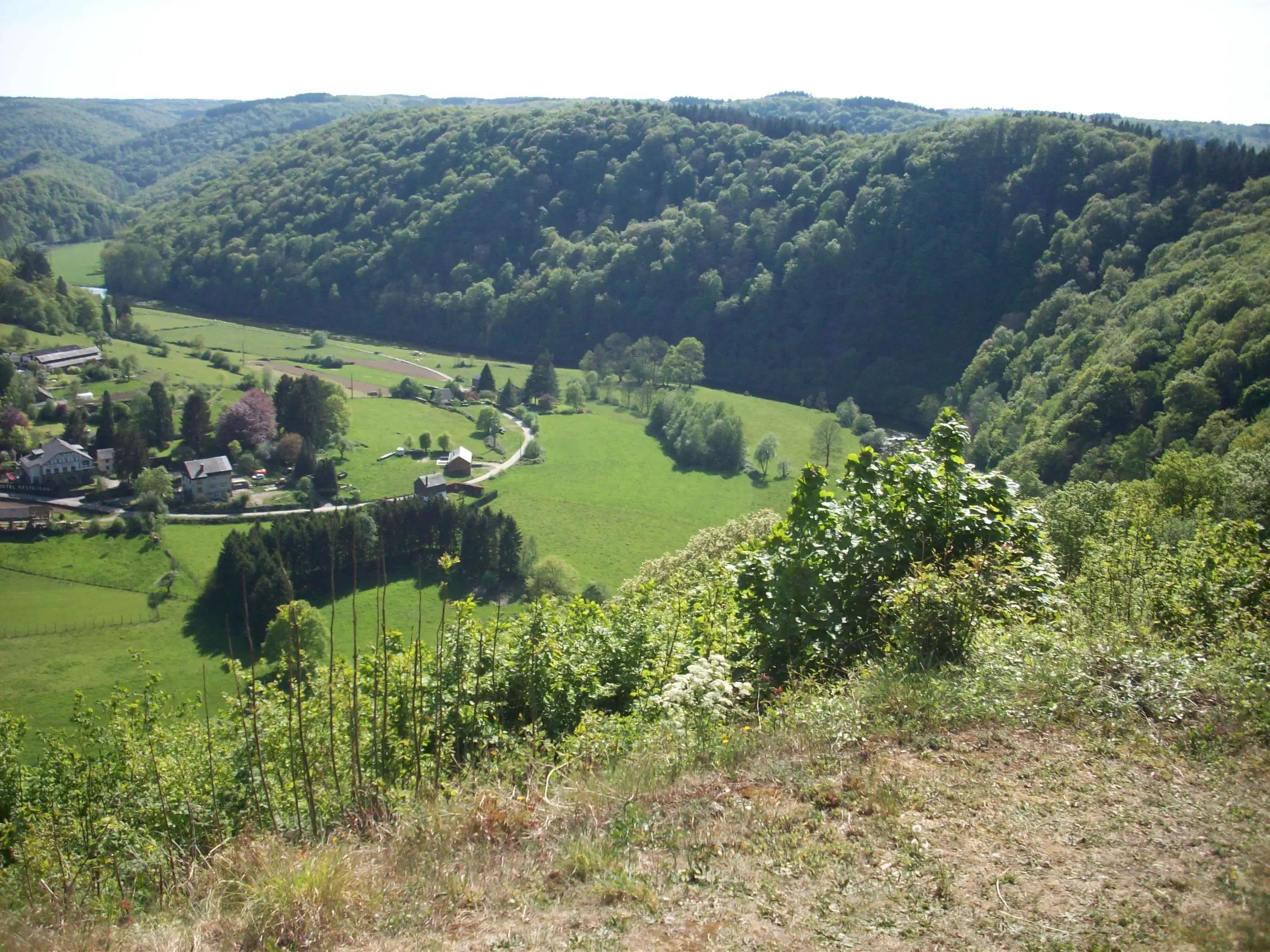
Spending a night under the stars in the heart of the Ardennes forests is possible — provided you do it legally and without leaving a trace. Here is the honest guide to bivouac around the Semois valley.
Sleeping a night in the wild, woken by the mist rising off the river and the song of the birds, is one of the finest experiences you can have in the wild Ardennes. But let us be clear and honest from the outset: you do not pitch your tent just anywhere. Bivouac follows a precise framework, and confusing it with wild camping can earn you a warning, even a fine, while damaging the very environment you have come to admire. This page explains what is allowed, where, how, and above all in what spirit — so that your night out remains a pleasure with no consequences for nature.
The Semois valley, with its deep meanders, wooded slopes and shifting light, lends itself wonderfully to this kind of simple adventure. Combining it with a kayak descent or a hike makes for a complete experience. But you still have to play by the rules. Let us take the time to lay the groundwork properly.
This is the starting point for everything, and the source of most misunderstandings. The two words do not describe the same practice, and the law does not treat them the same way.
Bivouac is a single-night halt, with a lightweight shelter — a minimalist tent, a tarp, a hammock — that you pitch in the evening, from sunset to sunrise. You arrive late, you leave early, you do not set up during the day, and you leave absolutely no trace behind you. It is a moving, simple and discreet practice, associated with hiking or paddling journeys.
Wild camping refers to a more permanent set-up: several nights in the same spot, a tent pitched in broad daylight, a camp table, an arranged site. This practice is prohibited outside grounds provided for that purpose. The difference therefore comes down to duration and, above all, to the footprint left behind: bivouac fades away, wild camping marks the ground.
Remember this simple formula: bivouac is endured, camping is chosen. You bivouac because you are on your way and night is falling; you camp because you decide to stay. In the Ardennes as elsewhere, it is this nuance that separates a tolerated or regulated practice from a prohibited one.
In Wallonia, free bivouac is generally prohibited outside the areas provided for that purpose. You therefore cannot pitch your tent at random in the forest, on a bank of the Semois or in a meadow, even for a single night. The forest massifs in particular are subject to strict regulation aimed at preserving the peace of the wildlife and the safety of visitors.
This does not mean it is impossible to sleep out legally. There is a network of authorised bivouac sites, often managed together with the Department of Nature and Forests (DNF). These sites, spread across several Walloon massifs, offer an identified spot where a single-night bivouac is permitted. Many require a booking or prior notice, sometimes via a dedicated platform or the local tourist office. This is the safe and responsible route.
Before setting off, you must always check the local regulations and any sensitive periods. The hunting season, in autumn and winter, may temporarily close forest zones for safety reasons. In summer, a high fire risk can lead to occasional bans. A site authorised one day may therefore be closed the next: check each time, without assuming that "it will be fine".
The Semois becomes the Semoy as it crosses the border, and the valley continues on the French side until it joins the Meuse at Monthermé. There, the Ardennes Regional Nature Park has made an interesting choice: rather than banning without any alternative, it has laid out a network of bivouac sites to channel the practice and support it.
There are thus dedicated bivouac sites in several places, for example at Hannappes, Montcornet, Gespunsart or Revin, the last of these being ideally placed in the loop of the Meuse very close to the Semoy valley. These sites, spare by nature, offer a clear, legal setting for pitching a tent for one night in the heart of the massif. As always, it is wise to confirm access conditions, availability and rules specific to each site before setting off, as they can change from one season to the next.
Whether on the Belgian or the French side, the logic is the same: you bivouac on an identified and authorised site, you stay one night, you leave nothing. The border does not change the spirit of the approach — only the people you turn to in order to learn the rules.
Bivouac is a school of simplicity. Unlike camping, it is not about reproducing the comfort of home, but about taking the bare essentials for a safe, restful night, then packing everything away without leaving a trace. A light pack also means a more discreet journey and a smaller impact on the ground.
To this base, add a first-aid kit, a charged phone (and a backup battery), something to eat without cooking if needed, and possibly a paper map of the area. Finally, check the weather the day before and on the day itself: a valley storm can turn a peaceful night into an ordeal, and some damp bottoms swell quickly after rain.
Beyond legality, bivouac rests on a simple ethic, known to hikers as "Leave No Trace". A few principles are enough to ensure that your passage remains invisible.
This is the most important and least negotiable rule. Fire is prohibited in the forest and on most sites, and the fire risk becomes serious as soon as the vegetation is dry. A fire leaves a lasting black scar on the ground, disturbs wildlife and can, in a matter of minutes, escape all control. You cook on an individual stove where it is permitted, and when in doubt, you simply do without a hot meal.
All waste leaves with you, including organic waste (peelings, food scraps) which does not break down as quickly as people think and attracts animals. The ideal is to leave the site cleaner than you found it. Do not dig, do not build, do not move stones or dead wood — which shelters a discreet but essential form of life.
The night belongs to the animals. Stay quiet and discreet, keep your distance, do not needlessly light up the undergrowth. The valley shelters a rich wildlife well worth discovering by day, as our guide to the wildlife and flora of the Semois describes: heron, kingfisher, beaver and dragonflies deserve to have their night-time peace left undisturbed.
A large part of the valley's land is private — meadows, woods, banks. You never bivouac on private property without permission, you do not set up in the immediate vicinity of homes, and you keep your dog on a lead. Respect for local people is what guarantees, over the long term, that the practice remains accepted.
True to the spirit of bivouac, you pitch the shelter at nightfall and take it down at first light. No camp standing all day long, no washing drying between two trees: the halt must stay fleeting, almost invisible. It is this discretion that sets the bivouacker apart from the wild camper.
This is undoubtedly the finest way to experience the valley: pairing the effort of the day with the rest of the night. A day spent paddling or walking, followed by a simple night in the wild, offers a total immersion that neither one provides on its own.
On the water, a descent of the Semois by kayak carries you through the finest meanders at water level, before you reach an authorised overnight point. On the trails, the hikes around Vresse-sur-Semois unroll ridges, viewpoints and deep forests — the ideal setting for a one- or two-day journey. Two-wheel enthusiasts, meanwhile, will appreciate the network of cycling, RAVeL and mountain biking on the Semois, which makes it easy to link several points in the valley.
Take note: you do not land or bivouac freely on the banks of the Semois. The launch points are fixed and authorised, and many stretches cross sensitive natural areas where landing is prohibited. A kayak-plus-bivouac journey is therefore planned around official sites and overnight points, not around a bank chosen at random during the descent.
A summer bivouac by the water naturally calls for a swim on waking or at the end of the day. Here too, caution and respect for the place come first: refer to our guide to natural swimming in the Semois to learn the suitable spots, the precautions to take and the zones to avoid. The valley's water is cool and alive — a simple pleasure that crowns a night out.
Bivouac is not for everyone, and that is fine. Sleeping in the wild can also mean comfort and peace of mind, with no regulatory grey area. The valley is full of official solutions that are just as immersive.
| Solution | For whom / for what |
|---|---|
| Official bivouac sites | Purists of the simple night who want legality and simplicity, without hunting for a spot at random. |
| Campsites of the valley | Families and groups: sanitary facilities, water, safety and a spot by the water. See our guide to camping on the Semois. |
| Unusual accommodation | Those who want immersion without giving up comfort: cabin, lodge tent, caravan. To be discovered in our selection of unusual accommodation on the Semois. |
| Guest houses and B&Bs | Long-distance hikers who want a real bed, a hot shower and a local welcome from stage to stage. |
These alternatives are not "second-best" solutions: they are different ways of experiencing the same valley, each with its own advantages. A well-placed campsite by the Semois offers immediate access to the water; unusual accommodation prolongs the magic of nature with a roof over your head. It is up to each person to shape their stay according to their taste for the spare life.
No. In Wallonia, free bivouac is generally prohibited outside dedicated sites. The forest is not a free camping ground: it is regulated to protect the wildlife, the flora and the safety of everyone. You bivouac only on an authorised site.
Often, yes. Many sites require a booking or prior notice. Enquire with the DNF, the tourist office or the dedicated platform before setting off, as places may be limited.
Yes, provided you follow the same rules: an authorised site, discretion, a dog kept on a lead so as not to disturb the wildlife. A first night out as a family is best prepared with suitable gear and gentle weather.
Caution calls for giving up or falling back on a solid-roof alternative (campsite, guest house). A valley storm, a strong wind or a waterlogged ground quickly turn bivouac into a bad experience, even a dangerous situation. Nature sets the pace, not the other way round.
Bivouac in the Ardennes is not a boundless freedom: it is a regulated privilege, resting on trust and respect. Well practised — on an authorised site, for a single night, without fire and without a trace — it offers one of the finest ways into the raw nature of the Semois valley. Badly practised, it lastingly damages what we claim to love. It is up to each of us to choose our side.
And to give your stay a thread that runs at water level, nothing beats a descent through the heart of the meanders: the Semois is wonderfully discovered paddle in hand, between two nights spent under the open sky.
Sources: Public Service of Wallonia / Department of Nature and Forests (DNF) — forest regulations and network of bivouac sites; Walloon environment portal (access to the massifs, hunting periods and fire risk); Ardennes Regional Nature Park (laid-out bivouac sites, Semoy valley); tourist offices of the Semois valley and VisitArdenne. Access conditions, the need to book and closure periods change from one season to the next: always check the local regulations in force before setting off. This page is intended for information only and does not replace the official rules.
Noté 4.6/5 sur 1282 avis
« A perfect family day on the Semois. The welcome at Kayak Belgique is warm, the equipment is spotless (the kayaks are modern and clean), and the free shuttle system is superbly organised. A must-visit in the Ardennes! »
« Beautiful kayak trip on the Semois starting from Vresse! Very friendly staff and excellent shuttle service. The riverside campsites along the Semois are also a must for nature lovers. »
« Superb 11 km kayak descent starting from Alle-sur-Semois. The wild nature of the Ardennes is magnificent in the spring sunshine. Very competitive prices compared to the competition. We'll be back! »
« Wonderful experience! The kayak tour on the Semois was perfectly organised. The team is very helpful and speaks good German. The scenery of the Belgian Ardennes is simply breathtaking. »
« Excellent kayak rental service and great campsite on the banks of the Semois. The prices are very fair and the atmosphere is friendly and family-oriented. The little terrace bar is perfect for a refreshing drink after the effort. »
« A fantastic last-minute welcome even though we hadn't booked in the middle of August. Life jackets and waterproof barrels are provided free of charge. Very safe descents, ideal with children! »
« Top-tier kayak rental on the Semois river. Extremely friendly staff, well-maintained kayaks, and a reliable shuttle. The viewpoints along the river are absolutely stunning. Highly recommend this local business! »